How to Start a Small Business from Home for Disabled in India
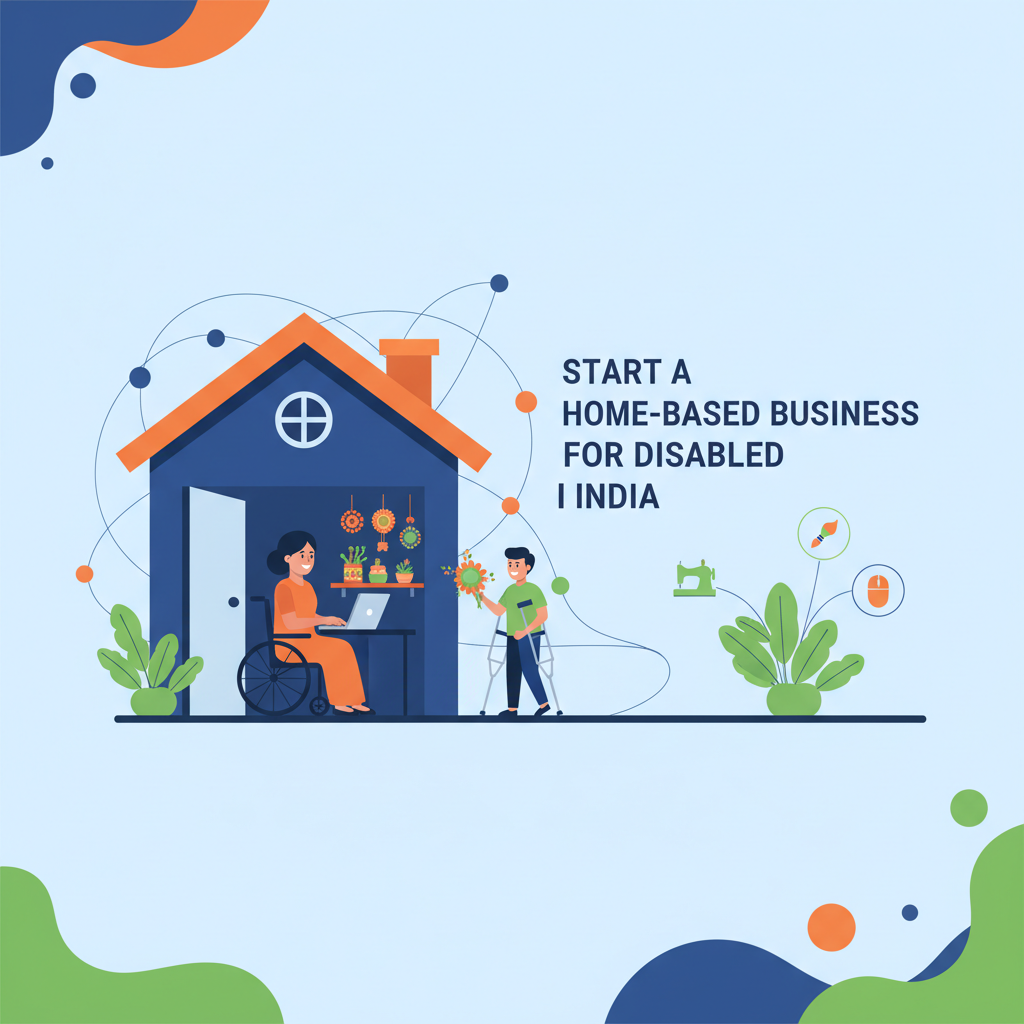
Dreaming of financial independence? Discover how to start a small business from home for disabled individuals in India. This comprehensive guide provides practical steps, government schemes, and inspiring ideas to help Divyang entrepreneurs thrive. Unlock your potential and build a successful home-based venture.
Starting a small business from home for disabled individuals in India can be a transformative journey towards financial independence and personal empowerment. With the right guidance and resources, Divyang entrepreneurs can leverage their unique skills and passion to create successful ventures directly from the comfort of their homes. India offers a supportive ecosystem with government schemes and a growing digital marketplace, making now an opportune time to explore home-based business ideas.
This article will walk you through the essential steps, from idea generation and legal formalities to funding options and marketing strategies, tailored specifically for Divyang aspiring entrepreneurs. We believe in providing actionable, practical advice to help you navigate the entrepreneurial landscape and build a sustainable business.
Identifying Your Niche and Business Idea
The first step in establishing any successful home-based business is to identify a niche that aligns with your skills, interests, and market demand. For Divyang entrepreneurs, this often means considering factors like accessibility, required physical exertion, and the ability to operate predominantly online or with minimal outside assistance. Think about what unique value you can offer to your customers.
Brainstorming Accessible Business Ideas
- Digital Services: Graphic design, content writing, web development, SEO consulting, social media management. These roles are highly flexible and location-independent.
- Handicrafts and Artisanal Products: Creating unique items like custom jewelry, handmade candles, personalized gifts, or traditional Indian crafts. Online platforms make selling easy.
- Tuition and Online Coaching: Teaching subjects you excel in, offering language classes, or providing coaching for competitive exams.
- Consulting and Advisory: Leveraging expertise in areas like finance, marketing, career counseling, or even specialised disability rights advocacy.
- Transcription and Data Entry: A steady option for those with good typing skills and attention to detail.
Consider your personal strengths and any specialized training you may have. For instance, a visually impaired individual with a strong command of language could excel in content writing or podcast editing, while someone with mobility challenges might find success in e-commerce or virtual assistant services.
Understanding Legalities and Registrations for Home Businesses
Once you have a business idea, it's crucial to understand the legal framework. Even a small business from home for disabled entrepreneurs requires some basic registrations to operate legitimately in India. Don't worry, these steps are often simpler than they seem.
Essential Registrations and Compliances
- Business Structure: For most small home-based businesses, a Sole Proprietorship is the easiest and most common structure to start with. It involves minimal formalities.
- GST Registration: If your annual turnover exceeds ₹20 lakhs (or ₹10 lakhs for specific northeastern and hill states), GST registration is mandatory. Many small businesses might not need this initially.
- UDYAM Registration (MSME): This is highly recommended for Divyang entrepreneurs. Registering as a Micro, Small, or Medium Enterprise (MSME) under Udyam provides numerous benefits, including easier access to credit, government schemes, and subsidies. The process is entirely online and free. Learn more about MSME benefits on our MSME Subsidies page.
- Local Municipality/Panchayat Registration: Some local authorities require a basic shop and establishment license, even for home-based operations. Check with your local body.
- Unique Disability ID (UDID) Card: If you haven't already, obtaining a UDID card is vital. It's a universal ID for Divyang persons that facilitates access to various government benefits and schemes. You can find guidance on UDID Registration on our platform.
Remember, these registrations ensure your business is recognized, which is essential for accessing financial support and building credibility with customers. Always keep copies of your documents safe.
Accessing Funding and Government Schemes
Funding is often a significant hurdle for new entrepreneurs. Thankfully, the Indian government has several initiatives to support Divyang entrepreneurs and small home-based businesses. Exploring these schemes can provide the necessary capital to kickstart your venture without significant personal investment.
Key Government Schemes for Divyang Entrepreneurs
- Mudra Yojana: The Pradhan Mantri Mudra Yojana (PMMY) provides collateral-free loans up to ₹10 lakhs for micro and small enterprises. There are three categories: Shishu (up to ₹50,000), Kishor (₹50,001 to ₹5 lakhs), and Tarun (₹5,00,001 to ₹10 lakhs). This is an excellent option for starting a small business from home for disabled individuals. Find more details on Mudra Loan on our site.
- Prime Minister's Employment Generation Programme (PMEGP): This scheme offers financial assistance for setting up new projects in manufacturing or service sectors, with significant subsidies for special categories, including Divyang entrepreneurs. For example, individuals in the general category get 15% subsidy for urban and 25% for rural projects, while special categories (including Divyang) receive 25% for urban and 35% for rural projects. The maximum project cost is ₹50 lakhs for manufacturing and ₹20 lakhs for service units. Visit our PMEGP Scheme page for more information.
- Stand-Up India Scheme: Designed to promote entrepreneurship among women and Scheduled Castes/Tribes, this scheme also includes provisions that can indirectly benefit Divyang entrepreneurs through allied support.
- National Handicapped Finance and Development Corporation (NHFDC) Schemes: NHFDC offers various credit schemes and skill development programs specifically for Divyang persons. These often have concessional interest rates.