GST Compliance for Divyang: Small Business Guide in India
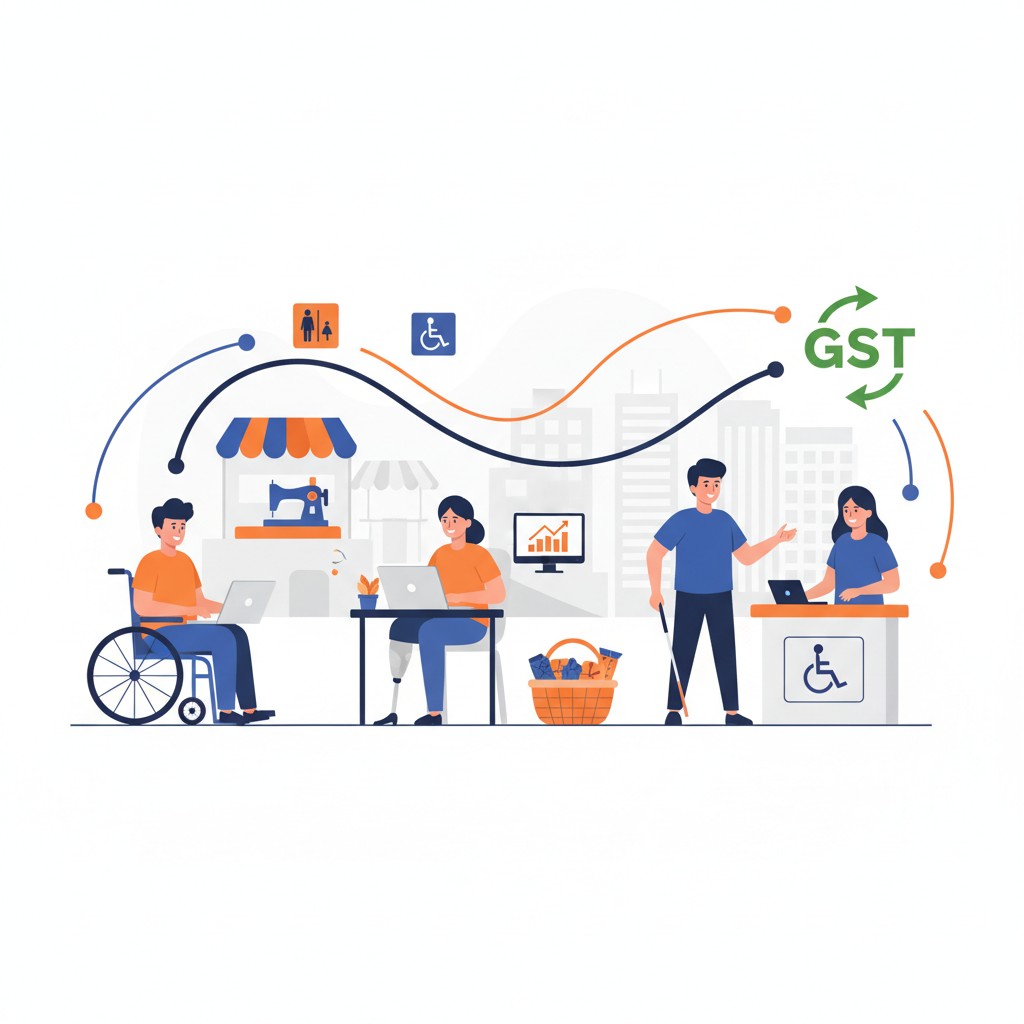
Navigating GST for your small business as a Divyang entrepreneur in India can seem complex. This comprehensive guide simplifies GST compliance, covering registration, returns, and benefits to help you succeed on Divyang Startup's free platform.
Welcome, aspiring Divyang entrepreneurs! Starting a small business in India is an exciting journey, and understanding Goods and Services Tax (GST) compliance is a crucial step towards long-term success. On Divyang Startup, our mission is to empower you with the knowledge and tools to thrive, completely free of charge. This guide will demystify GST compliance for Divyang small businesses in India, ensuring you confidently manage your tax obligations and focus on growing your venture.
Many Divyang entrepreneurs wonder about the intricacies of GST – when to register, how to file returns, and what benefits might be available. This article provides a clear, actionable roadmap, tailored for small businesses and keeping in mind the unique needs of Divyang individuals. By the end, you will have a solid understanding of GST and how to maintain seamless compliance, making your entrepreneurial journey smoother and more rewarding.
Understanding GST for Small Businesses in India
Goods and Services Tax (GST) is a unified indirect tax system that replaced multiple cascading taxes like VAT, excise duty, and service tax. It's a consumption-based tax levied on the supply of goods and services. For small businesses, particularly those run by Divyang entrepreneurs, understanding the basics of GST is fundamental to regulatory compliance and financial health.
Who Needs to Register for GST?
GST registration becomes mandatory when your aggregate annual turnover exceeds certain thresholds. For most goods suppliers, the threshold is ₹40 lakhs, while for service providers, it's ₹20 lakhs. However, there are special category states where these thresholds are lower (₹20 lakhs for goods and ₹10 lakhs for services). It's important to assess your business type and location.
- Inter-state supply: If you sell goods or services across state lines, GST registration is mandatory, regardless of your turnover.
- E-commerce sellers: Even if your turnover is below the threshold, selling through an e-commerce operator generally requires GST registration.
- Voluntary registration: You can also opt for voluntary GST registration even if your turnover is below the threshold. This can be beneficial for claiming input tax credit and enhancing business credibility.
Benefits of GST Registration for Small Businesses
While compliance might seem daunting, GST registration offers several advantages:
- Input Tax Credit (ITC): Registered businesses can claim credit for the GST paid on purchases of goods and services, reducing the overall tax burden. This is a significant advantage that unregistered businesses miss out on.
- Improved Credibility: Being GST compliant enhances your business's credibility and trustworthiness in the market, making it easier to attract customers and secure business loans like MUDRA loans or PMEGP scheme assistance.
- Wider Market Access: It enables you to sell goods and services across India without restrictions, including to other GST-registered businesses.
- Government Tenders: Many government contracts and tenders require businesses to be GST registered.
The GST Registration Process for Divyang Entrepreneurs
Registering for GST is an online process, and with the right documents, it can be quite straightforward. Divyang Startup encourages you to take this step with confidence.
Documents Required for GST Registration
The specific documents depend on your business structure (proprietorship, partnership, etc.), but generally include:
- PAN card of the applicant/business entity.
- Aadhar card of the applicant/proprietor/partners/directors.
- Proof of business registration or incorporation certificate.
- Address proof for the business premises (electricity bill, rent agreement, etc.).
- Bank account details (bank statement, cancelled cheque).
- Digital Signature Certificate (DSC) or EVC (Electronic Verification Code).
- UDID card for Divyang individuals (useful for various government schemes, though not strictly for GST, it's good to have for general documentation).
Step-by-Step Online Registration
- Visit the official GST portal (gst.gov.in).
- Click on "New Registration" and fill in the required details, including your PAN, mobile number, and email ID.
- You will receive a Temporary Reference Number (TRN).
- Log in with the TRN and proceed to fill out the detailed application form (FORM GST REG-01).
- Upload all necessary documents.
- Verify your application using a Digital Signature Certificate (DSC) or Electronic Verification Code (EVC).
- After successful submission, an Application Reference Number (ARN) will be generated.
- The application will be processed by the GST officer, and typically, within 3-7 working days, you will receive your GSTIN (GST Identification Number).
Simplify GST Returns and Compliance
Filing GST returns regularly is a critical aspect of GST compliance for Divyang small businesses in India. There are different types of returns, and understanding which ones apply to you is key.
Types of GST Returns for Small Businesses
Most small businesses typically need to file:
- GSTR-1: Details of outward supplies (sales). Filed monthly or quarterly depending on turnovevr.
- GSTR-3B: Summary of outward supplies, inward supplies, and input tax credit. Filed monthly.
- GSTR-4: For businesses opted for the Composition Scheme. Filed annually.
- Annual Return (GSTR-9): Filed annually by regular taxpayers.
The frequency of filing (monthly vs. quarterly) often depends on your turnover. Businesses with an annual turnover up to ₹5 crores can opt for the Quarterly Return Filing with Monthly Payment (QRMP) Scheme, simplifying compliance.
The Composition Scheme: A Simpler Option for Small Businesses
The GST Composition Scheme is designed to reduce the compliance burden for small taxpayers. If your turnover is up to ₹1.5 crores (₹75 lakhs for special category states), you can opt for this scheme. Under the Composition Scheme:
- You pay a fixed percentage of your turnover as GST (e.g., 1% for manufacturers and traders, 5% for restaurants, 6% for service providers).
- You cannot claim Input Tax Credit.
- You cannot issue tax invoices.
- You only need to file an annual return (GSTR-4) and a quarterly statement (CMP-08).
This scheme can significantly simplify GST compliance for Divyang small businesses in India, allowing you to focus more on operations and less on complex tax filings. Explore if this option is suitable for your business on the government schemes section of Divyang Startup.
Practical Tips for Smooth GST Compliance
- Maintain Accurate Records: Keep meticulous records of all sales, purchases, and expenses.
- Use Accounting Software: Modern accounting software can automate GST calculations and return filing, making the process much easier.
- Stay Updated: GST laws can change. Regularly check the official GST portal or reliable sources for updates.
- Seek Professional Help: If you find the process overwhelming, consider consulting a tax professional or leveraging the free resources available on Divyang Startup.
Financial Support and Schemes for Divyang Entrepreneurs with GST
While GST itself doesn't offer direct subsidies for Divyang individuals, being GST compliant opens doors to various government and financial schemes aimed at supporting entrepreneurs, including those with disabilities. Many schemes require a registered business entity and proper financial records, which GST compliance helps establish.
Connecting with Government Initiatives
- MSME Schemes: Registering your business as an MSME (Micro, Small, and Medium Enterprise) can provide access to numerous benefits, including credit guarantees, interest rate subsidies, and preferential procurement policies. GST registration helps in formally recognizing your business. Learn more about MSME subsidies on our platform.
- Startup India: While broader, being a registered entity with GST can aid in applying for recognition under Startup India, which offers tax benefits and funding opportunities.
- Loans and Funding: Banks and financial institutions often require GST registration for business loans. Having a clear GST compliance history can strengthen your loan applications for schemes like MUDRA or PMEGP.
For example, a Divyang entrepreneur in Kolkata running a small handicraft business with an annual turnover of ₹30 lakhs, who is GST registered, can leverage Input Tax Credit on raw materials, thereby reducing their operational costs. They can also confidently apply for a business loan from a bank, presenting their GST records as proof of business legitimacy and financial discipline.
Conclusion
Navigating GST compliance for Divyang small businesses in India is an integral part of building a sustainable and successful enterprise. While it may seem intricate at first, understanding the basics of registration, returns, and available schemes can significantly ease the process. Remember, compliance not only fulfills your legal obligations but also opens pathways to credibility, financial benefits, and wider market access. Divyang Startup is here to guide you every step of the way with our free courses, mentorship, and resources to ensure your entrepreneurial journey is as smooth and rewarding as possible. Take charge of your business's financial future today!