E-commerce Basics for Divyang: Starting a Small Business in India
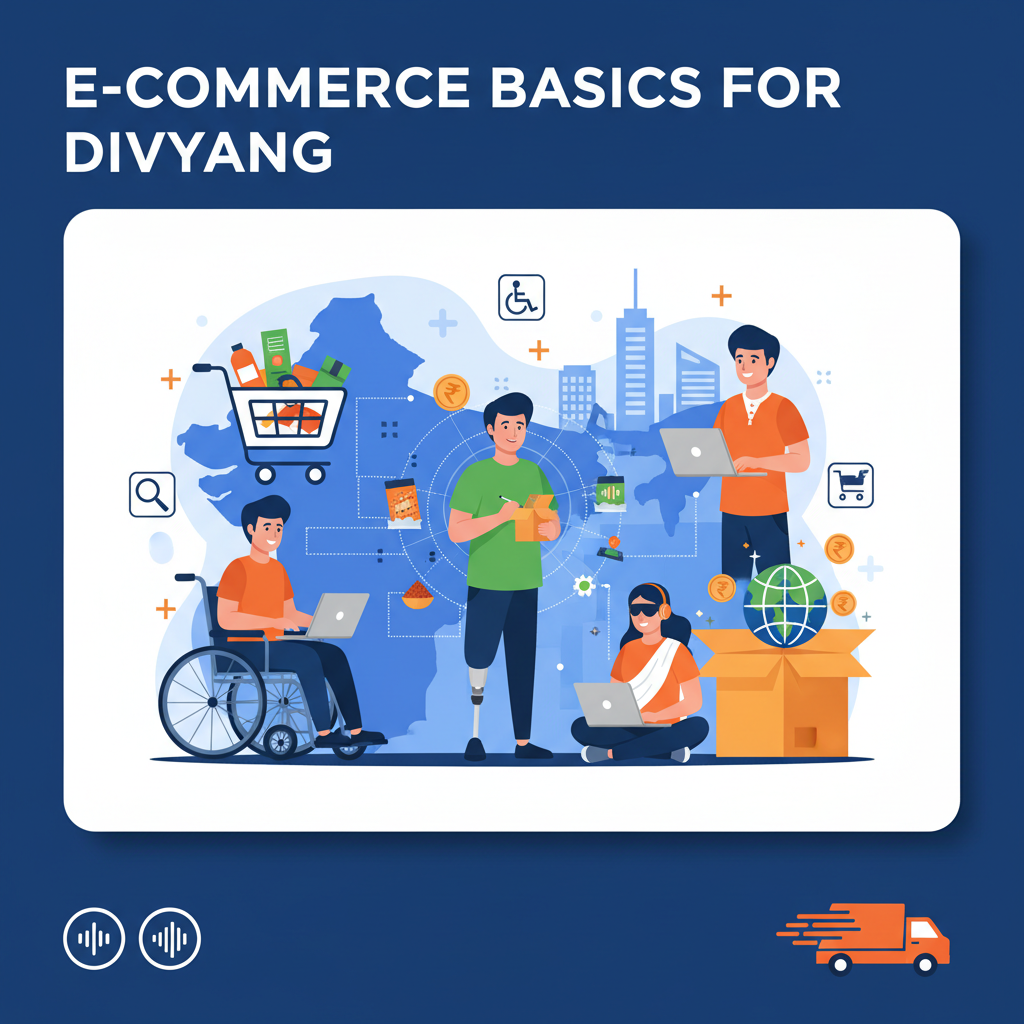
Unlock the world of online selling! This guide simplifies e-commerce for Divyang entrepreneurs in India, helping you start and grow a small business with practical steps and free resources from Divyang Startup.
Are you a Divyang individual in India with a brilliant business idea, but wondering how to reach more customers beyond your immediate surroundings? E-commerce offers an incredible pathway to turn your entrepreneurial dreams into reality. It's not just about selling online; it's about breaking barriers, achieving financial independence, and showcasing your unique talents to a wider audience. This comprehensive guide will walk you through the essential e-commerce basics for Divyang small business in India, empowering you to launch and grow your venture with confidence.
At Divyang Startup, we believe in providing free, accessible resources to help every aspiring Divyang entrepreneur thrive. E-commerce is a powerful tool in today's digital age, and with the right knowledge, you can establish a robust online presence for your products or services, reaching customers across India and even globally. Let's dive into how you can leverage the power of the internet to build a successful small business.
Understanding E-commerce: Your Digital Marketplace
E-commerce, or electronic commerce, refers to the buying and selling of goods or services using the internet. It's essentially your shop, open 24/7, without the need for a physical storefront. For Divyang entrepreneurs, this offers unparalleled flexibility and accessibility, overcoming many traditional business hurdles.
Why E-commerce is Ideal for Divyang Entrepreneurs
- Accessibility: Manage your business from the comfort of your home, eliminating commuting challenges.
- Wider Reach: Sell to anyone, anywhere in India, not just your local community.
- Lower Overhead Costs: Often less expensive than maintaining a physical shop, reducing initial investment.
- Flexibility: Set your own hours and work at your own pace, adapting to your personal needs.
- Showcase Talent: A platform to beautifully display handmade crafts, unique services, or innovative products.
Step-by-Step Guide to Starting Your E-commerce Journey
Launching an online business might seem daunting, but by breaking it down into manageable steps, you'll find it's much more achievable. Here’s a practical roadmap for e-commerce basics for Divyang small business in India.
1. Choose Your Product or Service Wisely
What are you passionate about? What problem do you solve? Identify a niche that suits your skills and resources. Consider:
- Handicrafts: Handmade jewelry, traditional art, bespoke clothing.
- Digital Products: Graphic design, web development, content writing, online courses.
- Services: Counseling, tutoring, virtual assistance.
- Reselling: Curated products from other suppliers.
Example: Meet Lakshmi from Jaipur, who uses her exceptional embroidery skills to create exquisite sarees. By selling them online, she reaches customers in Mumbai, Bangalore, and even internationally, earning an average of ₹5,000-₹15,000 per saree. Her online store helped her expand far beyond local markets.
2. Business Registration and Legalities
While you can start small, formalizing your business eventually helps with credibility, loans, and legal protection. Consider registering as an MSME (Micro, Small, and Medium Enterprise) to avail government benefits and schemes. A UDID card can also be beneficial in accessing various government support programs.
- Udyam Registration: Simple online process for MSMEs.
- GST Registration: Required if your annual turnover exceeds specified limits.
- Bank Account: A separate business bank account is crucial.
3. Building Your Online Storefront
This is where your products come to life! You have several options:
Option A: E-commerce Marketplaces
Join existing platforms like Amazon Seller, Flipkart Seller, Meesho, or Etsy. These are excellent for beginners as they handle much of the technical setup, marketing, and payment processing. They have a massive customer base already.
- Pros: Easy to start, built-in audience, lower upfront cost, marketing support.
- Cons: Commission fees, less control over branding, intense competition.
Many Divyang entrepreneurs start here because it minimizes the technical learning curve. For example, a visually impaired entrepreneur selling homemade organic soaps could easily list their products on Meesho, leveraging its wide reach without needing to build a complex website.
Option B: Your Own E-commerce Website
Using platforms like Shopify, WooCommerce (for WordPress), or even open-source solutions gives you full control over your brand, design, and customer experience. This is ideal as your business grows.
- Pros: Full branding control, no marketplace fees (only platform fees), direct customer relationships, custom features.
- Cons: Higher initial setup cost, requires more technical understanding or investment in web development.
For more insights on building your online presence, check out our free e-commerce courses at Divyang Startup.
4. Product Photography and Descriptions
High-quality images and compelling descriptions are vital for online sales. Since customers can't physically touch your products, good visuals and detailed information are your selling tools.
- Photography: Use natural light, clear backgrounds, and show your product from multiple angles.
- Descriptions: Highlight benefits, features, materials, dimensions, and unique selling points. Tell your story!
5. Payment Gateways
How will customers pay you? Integrate secure payment gateways like Razorpay, PayU, or Paytm. These allow customers to use credit/debit cards, UPI, net banking, and digital wallets easily.
6. Shipping and Logistics
Efficient delivery is key to customer satisfaction. Partner with reliable courier services like India Post, Delhivery, Blue Dart, or Shiprocket. Clearly state your shipping policies and costs on your website or marketplace listings.
7. Marketing Your E-commerce Business
Once your store is ready, you need to attract customers! Some effective strategies include:
- Social Media Marketing: Use platforms like Instagram, Facebook, and WhatsApp to showcase products and engage with potential customers.
- Search Engine Optimization (SEO): Optimize your product titles and descriptions with keywords so customers can find you on Google.
- Word-of-Mouth: Encourage satisfied customers to share their experience.
- Divyang Startup Mentorship: Explore our free mentorship programs for guidance on marketing and business growth.
Government Support and Financial Assistance
India offers several schemes to support small businesses, including those led by Divyang entrepreneurs:
- Mudra Yojana: Provides collateral-free loans up to ₹10 Lakh for micro and small enterprises.
- PMEGP (Prime Minister's Employment Generation Programme): Offers subsidies for new projects.
- MSME Schemes: Various benefits for registered MSMEs, including credit guarantees and interest subsidies. Learn more at Government Schemes for Divyang.
Example: Rohit, a mobility-challenged entrepreneur from Delhi, started an online store selling custom-designed t-shirts. He secured a Mudra loan of ₹70,000 which helped him purchase a printing machine and initial inventory, scaling his business significantly within a year, now earning around ₹40,000 monthly.
Embracing Challenges and Sustaining Growth
Every business faces challenges, and e-commerce is no exception. Expect competition, occasional technical glitches, and the need to constantly learn and adapt. However, with resilience and continuous effort, you can overcome these hurdles.
- Customer Service: Respond promptly to queries and feedback.
- Feedback Loop: Learn from customer reviews to improve products and services.
- Stay Updated: The e-commerce landscape evolves; keep learning about new tools and strategies.
Divyang Startup is committed to being your partner on this journey, offering valuable articles and free resources to help you adapt and thrive.
Conclusion
Starting an e-commerce business is a transformative journey for Divyang entrepreneurs in India. It offers a unique blend of flexibility, reach, and independence, allowing you to build a sustainable livelihood and make a significant contribution. By understanding the e-commerce basics for Divyang small business in India, from product selection and online store setup to marketing and leveraging government schemes, you are well-equipped to embark on this empowering path.
Remember, your journey might have its unique challenges, but it also presents unparalleled opportunities. Divyang Startup is here to support you every step of the way with free courses, mentorship, and a community dedicated to your success. Don't hesitate to explore our resources and take the first step towards building your thriving online empire today!