Divyangjan Self-Employment: Low Investment Startup Ideas for Entrepreneurs | Divyang Startup
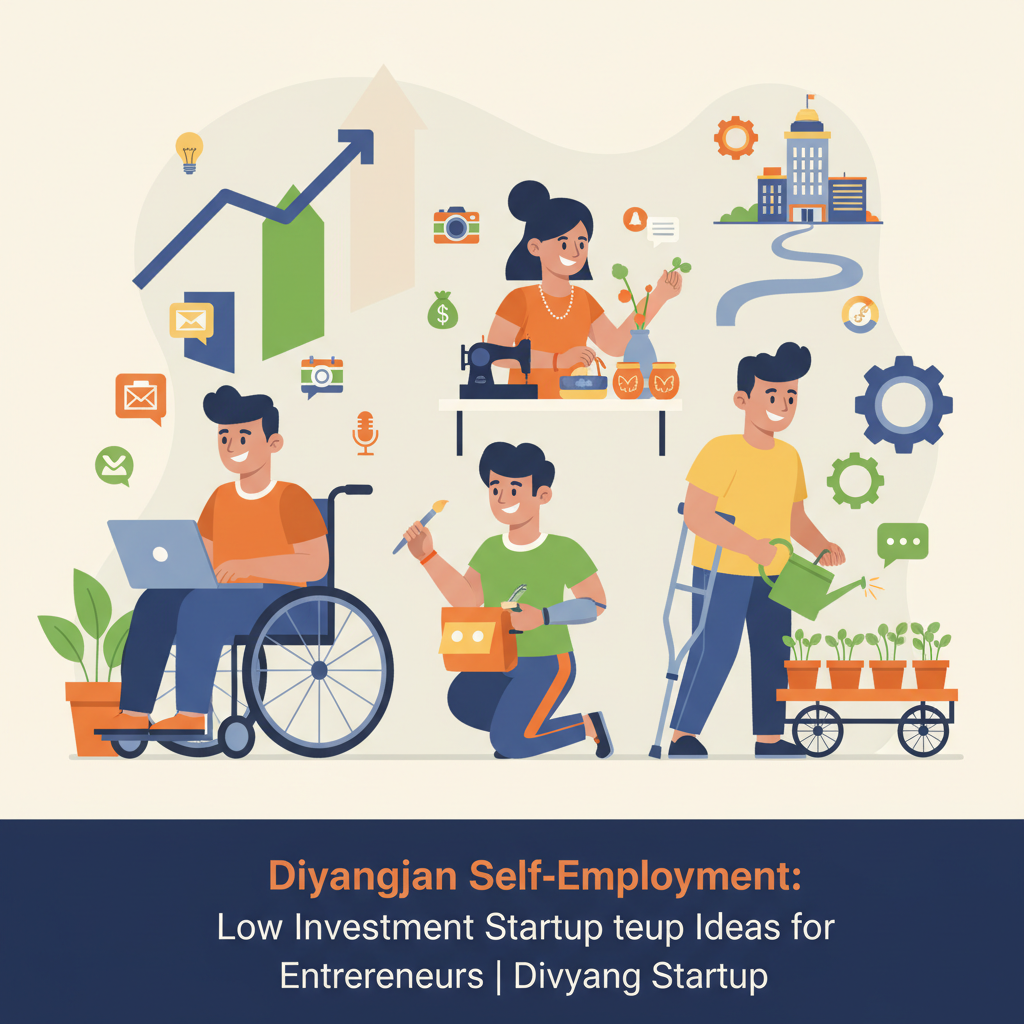
Discover practical, low-investment startup ideas for Divyangjan entrepreneurs in India. This guide covers accessible business opportunities, essential government schemes, and financial support options to help you start your own venture with minimal capital.
Starting your own business can be a rewarding path to financial independence and personal growth for Divyangjan. Many viable startup ideas require minimal initial investment and can be operated from home or with accessible setups, empowering entrepreneurs to leverage their skills and creativity. This guide explores various low-investment opportunities and outlines the essential support systems available in India to help you launch your venture successfully.
Key takeaways:
- Identify accessible, low-investment startup ideas suitable for Divyangjan.
- Understand government schemes like PMEGP, MUDRA, and Stand-Up India for financial support.
- Focus on leveraging existing skills and market demand for successful ventures.
- Utilize digital tools and online platforms to reduce overhead costs and expand reach.
- Connect with resources like the National Handicapped Finance and Development Corporation (NHFDC).
What are accessible startup ideas for Divyangjan with low investment?
Accessible startup ideas for Divyangjan often focus on services or products that can be delivered remotely, from home, or with minimal physical modifications, requiring little capital. These include digital services, craft-based businesses, and skill-based coaching, enabling entrepreneurs to start with existing resources.
Many Divyangjan entrepreneurs find success in fields that leverage their unique talents and can be adapted to their specific needs. Here are a few examples:
- Online Content Creation: This can include blogging, YouTube channels focusing on specific niches (e.g., adaptive living, skill tutorials), podcasting, or even creating digital art. The main investment is time and a basic setup like a computer and internet.
- Digital Marketing Services: Offering services like social media management, content writing, search engine optimization (SEO), or website design requires strong digital skills rather than significant capital. Many online courses can help hone these skills.
- Handicrafts and Artisanal Products: Creating handmade jewellery, traditional art pieces, embroidered items, or custom gifts can be done from home. The investment is primarily in raw materials, and products can be sold online through platforms or local markets. For example, a home-based artisan in Jaipur could specialize in miniature paintings.
- Tuition and Online Coaching: If you have expertise in a subject, offering online tuition (for school subjects, competitive exams) or coaching (for life skills, vocational skills) is a high-demand, low-investment option. A simple webcam and internet connection are often sufficient.
- Event Management Support: While large-scale event management might be challenging, offering specific support services like virtual event coordination, guest list management, or digital invitation design can be done remotely.
- Food and Catering (Home-based): For those with culinary skills, preparing specialized home-cooked meals, baked goods, or snacks for local delivery or small orders can be a great start. Initial investment is mainly ingredients and packaging. For instance, a home kitchen in Bengaluru could offer healthy tiffin services.
How can Divyangjan start a business with minimal capital?
To start a business with minimal capital, Divyangjan entrepreneurs should focus on leveraging their existing skills, utilizing free or low-cost digital tools, and accessing government support schemes. Prioritizing service-based models or products with low material costs helps keep initial expenses down.
It's crucial to conduct thorough market research to identify a genuine demand for your product or service. Begin by validating your idea with a small pilot project or by offering services to a limited number of clients. This approach allows you to test your business model without committing significant financial resources. Consider collaborating with local community groups or partnering with organizations that support entrepreneurs.
What government schemes support Divyangjan entrepreneurs in India?
The Indian government offers several schemes designed to provide financial assistance and support to Divyangjan and other aspiring entrepreneurs, helping them overcome financial barriers to starting a business. These schemes often include subsidies, loans at concessional rates, and training programs.
Here are some key schemes:
- Prime Minister's Employment Generation Programme (PMEGP): Administered by the Ministry of Micro, Small and Medium Enterprises (MSME), PMEGP provides financial assistance for setting up new enterprises in both manufacturing and service sectors. It offers subsidies on project costs, and Divyangjan beneficiaries often receive higher subsidy rates. To learn more and apply, visit the official portal: kviconline.gov.in.
- Pradhan Mantri MUDRA Yojana (PMMY): MUDRA loans are available for non-corporate, non-farm small/micro-enterprises. There are three categories: 'Shishu' (up to ₹50,000), 'Kishore' (₹50,001 to ₹5,00,000), and 'Tarun' (₹5,00,001 to ₹10,00,000). These loans are collateral-free and can be accessed through various banks. Find details on mudra.org.in. For more information, you can also explore our MUDRA loan guide.
- Stand-Up India Scheme: This scheme promotes entrepreneurship among women and Scheduled Castes/Scheduled Tribes. While primarily for these groups, it also has provisions that can indirectly benefit businesses promoted by or employing Divyangjan. It facilitates bank loans between ₹10 lakh and ₹1 Crore for setting up greenfield enterprises.
- National Handicapped Finance and Development Corporation (NHFDC): NHFDC, under the Ministry of Social Justice & Empowerment, provides financial assistance for self-employment ventures for Divyangjan. This includes term loans, skill development training, and micro-finance. More details are available on nhfdc.nic.in.
- MSME Schemes: The Ministry of MSME offers various other schemes for promoting small and medium enterprises, including credit guarantee schemes and incubation support. Registering as an MSME can open doors to numerous benefits. Visit msme.gov.in for comprehensive information, or check our MSME subsidies page.
It is important to remember that scheme rules, eligibility criteria, and subsidy amounts can change. Always verify the latest information on the official government portals before applying.
How to apply for financial assistance for Divyangjan self-employment?
Applying for financial assistance for Divyangjan self-employment typically involves identifying the most suitable scheme, preparing a robust business plan, gathering necessary documents, and submitting the application through designated banks or online portals. A clear understanding of the scheme's requirements is crucial.
Here's a general step-by-step process:
- Identify the Right Scheme: Research schemes like PMEGP, MUDRA, or NHFDC loans based on your business idea, project cost, and eligibility. Consider your specific disability and how it aligns with the scheme's focus.
- Develop a Business Plan: Create a detailed business plan outlining your idea, market analysis, operational strategy, financial projections, and how the loan/subsidy will be utilized. This is a critical document for any financial application.
- Gather Required Documents: Prepare all necessary documents, which typically include:
- UDID card or valid disability certificate
- Aadhaar Card
- PAN Card
- Proof of address (utility bill, driving license)
- Proof of age
- Educational qualification certificates
- Bank passbook/account details
- Project report/business plan
- Caste certificate (if applicable for specific schemes)
- Passport-sized photographs
- Submit Application: Depending on the scheme, applications can be submitted online through the respective scheme portals (e.g., Udyam Registration for MSME, PMEGP portal) or directly at participating banks.
- Interview and Approval: You might be called for an interview to discuss your business plan. If approved, the loan or assistance will be disbursed as per the scheme's guidelines.
Many resources, including district industries centers and lead banks, can offer guidance during the application process. Feel free to explore our government schemes section for more detailed information.
What are the benefits of self-employment for Divyangjan?
Self-employment offers Divyangjan numerous benefits, including greater flexibility, control over their work environment, and the ability to leverage their unique skills and talents to achieve financial independence. It promotes dignity, empowerment, and active participation in the economy.
Beyond financial gains, starting your own venture can lead to:
- Flexibility and Autonomy: Entrepreneurs can set their own hours, adapt their workspace to their needs, and make decisions that best suit their capabilities and lifestyle.
- Skill Utilization: It provides an opportunity to use specific skills and passions that might not be fully utilized in traditional employment settings.
- Economic Independence: Self-employment fosters financial self-reliance, reducing dependence and enhancing overall quality of life.
- Social Inclusion: By creating successful businesses, Divyangjan entrepreneurs contribute to society, challenging stereotypes and promoting a more inclusive economic landscape.
- Role Model Creation: Successful Divyangjan entrepreneurs inspire others, demonstrating what is possible with determination and support.
Conclusion
Divyangjan self-employment offers a powerful pathway to economic empowerment and personal fulfillment through low-investment startup ideas. With the right blend of innovative thinking, skill utilization, and leveraging government support schemes like PMEGP, MUDRA, and NHFDC, aspiring entrepreneurs can successfully launch and grow their businesses. Remember to thoroughly research your chosen field, plan meticulously, and utilize available resources. Your entrepreneurial journey can not only transform your own life but also inspire many others to pursue their dreams.