Divyang Accessibility India: How to Find Accessible Services?
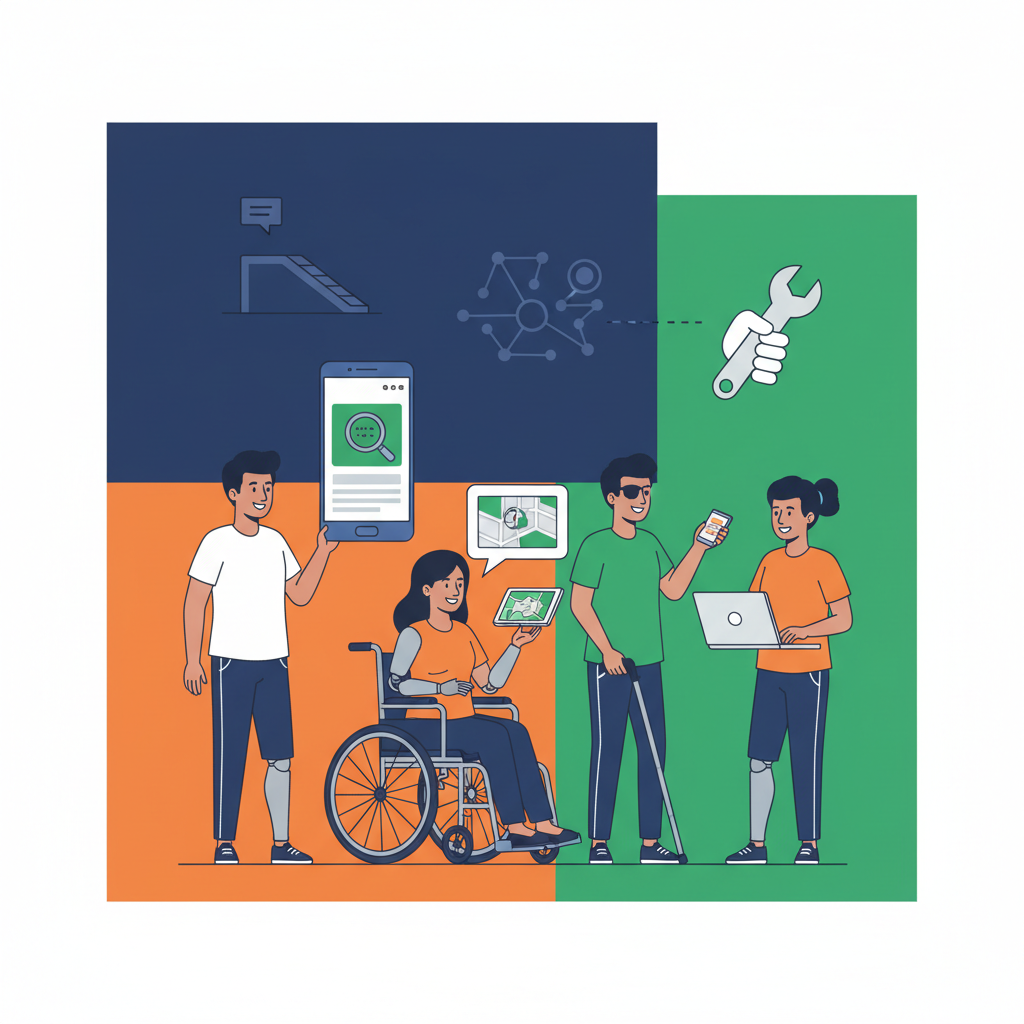
Finding accessible services is crucial for Divyangjan to navigate daily life and entrepreneurship in India. This guide explores how to locate and utilise accessible public transport, buildings, digital platforms, and support services to ensure greater independence and participation across various sectors. Learn about key resources and initiatives helping disabled entrepreneurs.
Navigating daily life and pursuing entrepreneurship requires reliable access to essential services. For Divyangjan in India, finding accessible transport, buildings, digital platforms, and support services is vital for independence and full participation. This article outlines practical ways to locate and utilise these services, empowering disabled entrepreneurs to thrive.
Key Takeaways
- Accessibility is a right, essential for independent living and entrepreneurship for Divyangjan.
- Government initiatives like the Accessible India Campaign promote accessible infrastructure and services.
- Utilise official government portals, specific apps, and community networks to find accessible resources.
- Always verify accessibility features beforehand, especially for transport and public spaces.
- Advocate for better accessibility by providing feedback to service providers and local authorities.
What Does Divyang Accessibility Mean in India?
Divyang accessibility in India refers to creating environments, products, and services that can be independently accessed and used by persons with disabilities (PwD). This includes physical access to buildings and public spaces, accessible transportation, information and communication technology (ICT), and inclusive services. It aligns with the Rights of Persons with Disabilities (RPwD) Act, 2016, which mandates accessibility as a fundamental right.
Ensuring accessibility enables Divyangjan to participate equally in society, access education, employment, healthcare, and entrepreneurship opportunities. It moves beyond mere compliance, focusing on creating truly inclusive experiences for all.
How Can Divyangjan Find Accessible Public Transport in India?
Finding accessible public transport in India involves looking for services that cater to the needs of persons with disabilities, such as ramps, reserved seating, and audio announcements. While still evolving, various modes of transport are gradually becoming more inclusive. Checking official websites or dedicated apps for specific accessibility features before travel is advisable.
Accessible Train Travel
Indian Railways has made strides in improving accessibility. Many major railway stations feature ramps, accessible toilets, and dedicated parking. Trains increasingly offer accessible coaches with wider doors and accessible lavatories. Passengers can check the accessibility features of stations and trains on the Indian Railways website or at the station inquiry counter. Pre-booking assistance for boarding and deboarding is also available upon request.
Accessible Bus Services
Some state transport corporations and city bus services are introducing low-floor buses with ramps, designated wheelchair spaces, and audio announcements. For instance, cities like Delhi, Mumbai, and Bangalore have experimented with or implemented accessible buses on certain routes. It's best to check with the local city transport authority's website or helpline for details on accessible routes and bus types.
Accessible Air Travel
Airlines in India are generally well-equipped to assist Divyang passengers, offering wheelchair assistance from check-in to aircraft, and assistance with boarding and deboarding. It is essential to inform the airline in advance (at least 48 hours before travel) about specific accessibility needs to ensure seamless service. Most airports also provide accessible infrastructure like ramps, elevators, and accessible restrooms. You can find more details on each airline's official website under their "Special Assistance" or "Persons with Reduced Mobility" sections.
Where to Locate Accessible Public Buildings and Spaces?
Locating accessible public buildings and spaces is becoming easier due to ongoing government initiatives. The Accessible India Campaign (Sugamya Bharat Abhiyan) aims to make public infrastructure, transportation, and information and communication technology accessible for persons with disabilities across India.
Many government buildings, hospitals, banks, and educational institutions are being retrofitted with ramps, accessible restrooms, and tactile paving. While a comprehensive, real-time database is still under development, you can often find information on the accessibility features of specific public buildings by checking their official websites or contacting them directly. Local government bodies and municipal corporations are also good points of contact for information regarding accessible facilities in their jurisdiction.
For entrepreneurs, ensuring their business premises are accessible can significantly broaden their customer base and create an inclusive work environment. Resources are available through MSME support programs that might assist in making workplaces accessible.
How to Find Accessible Digital Services and Information?
Accessible digital services and information ensure that websites, mobile applications, and digital documents can be used by Divyangjan, including those with visual, auditory, cognitive, or motor impairments. This is crucial for accessing government schemes, banking, e-commerce, and educational resources.
Government Portals and Apps
The Government of India has been working to make its official websites and mobile applications compliant with Web Content Accessibility Guidelines (WCAG). Websites of ministries like the Department of Empowerment of Persons with Disabilities (DEPwD) often include accessibility features. Look for accessibility statements or icons on government portals like udid.gov.in or socialjustice.gov.in. Many banking apps and e-governance platforms are also incorporating features like screen reader compatibility and keyboard navigation.
Assistive Technologies and Tools
Various assistive technologies help Divyangjan access digital content. Screen readers like NVDA and JAWS, screen magnifiers, voice recognition software, and alternative input devices are widely available. Learning about these tools and how to integrate them into daily digital use can unlock a vast array of online services. Information on these tools can often be found on disability-focused NGOs' websites and technology blogs.
For Divyang entrepreneurs, understanding digital accessibility best practices is key to building inclusive online businesses and reaching a wider audience.
What Support Services Are Available for Divyangjan in India?
Beyond physical and digital accessibility, a range of support services helps Divyangjan live independently and pursue their goals. These include schemes for assistive devices, financial aid, and counseling.
Assistive Devices
Several government schemes provide financial assistance or direct provision of assistive devices. For example, the ADIP (Assistance to Disabled Persons for Purchase/Fitting of Aid/Appliances) scheme helps Divyangjan procure devices like wheelchairs, hearing aids, and prosthetics. National institutions and various NGOs also distribute assistive devices. Details can typically be found on state social welfare department websites or through institutions like Artificial Limbs Manufacturing Corporation of India (ALIMCO).
Financial Assistance and Entrepreneurship Support
The government offers various schemes to support the economic empowerment of Divyangjan. Schemes like the Pradhan Mantri Mudra Yojana (PMMY), Prime Minister's Employment Generation Programme (PMEGP), and the National Handicapped Finance and Development Corporation (NHFDC) provide loans and subsidies for starting businesses. These initiatives aim to foster self-employment and reduce dependency. Eligibility criteria and application processes are usually detailed on their respective official portals. Always verify current scheme rules and financial benefits on the official portal before applying.
Counseling and Rehabilitation Services
Many government rehabilitation centers and non-governmental organisations (NGOs) provide counseling, therapy, and vocational training services. These services are crucial for mental well-being, skill development, and social integration. Finding local centers can often be done through district disability welfare offices or by searching for NGOs working in the disability sector in your region. Learning about these support structures can be part of your entrepreneurial journey.
Conclusion
Finding accessible services in India is a journey of awareness, advocacy, and utilising available resources. While challenges remain, significant progress is being made in creating a more inclusive environment for Divyangjan. By actively seeking out accessible transport, public spaces, digital platforms, and support services, Divyangjan can enhance their independence, participate fully in society, and build successful entrepreneurial ventures. Always remember to verify the most current information and facilities through official channels before making plans.