Divyang Identity: How to Get a Disability Certificate in India?
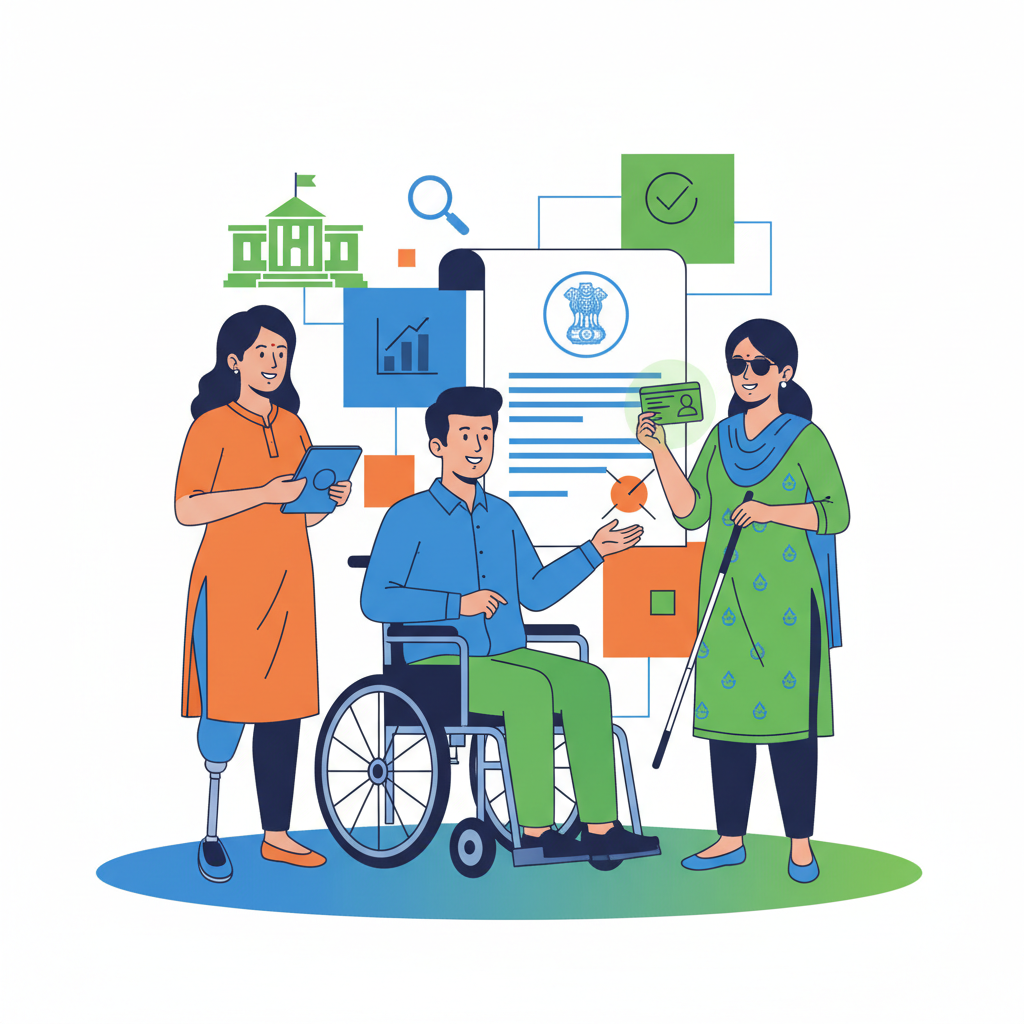
The disability certificate is a vital document for Divyangjan in India, unlocking access to various government schemes and benefits. This guide explains the process of applying for and obtaining this essential identity proof, detailing eligibility, required documents, and the step-by-step application procedure.
A disability certificate is a crucial document for Divyangjan (persons with disabilities) in India, serving as official proof of disability and enabling access to a wide range of government schemes, benefits, and facilities. Obtaining this certificate is a foundational step towards availing support for education, employment, travel, and healthcare. This comprehensive guide outlines the process, from understanding eligibility to the step-by-step application.
Key Takeaways
- A disability certificate is essential for Divyangjan to access government benefits.
- Application can be offline at a designated medical authority or online via the UDID portal.
- The process involves medical assessment and verification of documents.
- The Unique Disability ID (UDID) card integrates the certificate and simplifies identification.
- Always verify current requirements on official government portals.
What is a Disability Certificate and Why is it Important for Divyangjan?
A disability certificate is an official document issued by a competent medical authority that certifies an individual's specific disability as per the provisions of the Rights of Persons with Disabilities Act, 2016. It quantifies the percentage and type of disability, which is critical for determining eligibility for various government support systems.
For Divyangjan, this certificate is more than just a piece of paper; it's a gateway to empowerment. It is required for accessing educational scholarships, employment reservations, travel concessions, assistive devices, and benefits under schemes like the Pradhan Mantri Jan Arogya Yojana or various state-specific welfare programs. It validates one's identity as a person with disabilities, ensuring they receive the entitlements designed to foster inclusion and independence.
Who is Eligible to Apply for a Disability Certificate in India?
Eligibility for a disability certificate is determined based on the nature and percentage of disability as defined by the Rights of Persons with Disabilities Act, 2016. An individual must have one or more of the specified disabilities, and the percentage of disability, as assessed by a medical board, must typically be 40% or more to qualify for most benefits. The Act recognises 21 types of disabilities, including locomotor disability, visual impairment, hearing impairment, speech and language disability, intellectual disability, mental illness, autism spectrum disorder, cerebral palsy, muscular dystrophy, chronic neurological conditions, specific learning disabilities, multiple sclerosis, thalassemia, hemophilia, sickle cell disease, multiple disabilities, acid attack victims, and Parkinson's disease.
Any Indian citizen falling under these categories can apply. There are no age, income, or gender restrictions for applying for the certificate itself, although specific schemes might have their own criteria.
What Documents Are Needed for a Disability Certificate Application?
Having the correct documents prepared is crucial for a smooth application process. While requirements can sometimes vary slightly by state or specific medical board, a standard set of documents is generally needed:
Mandatory Documents Checklist:
- Proof of Identity: Aadhaar Card, PAN Card, Driving License, Voter ID, or Passport.
- Proof of Address: Aadhaar Card, Passport, Electricity Bill, Water Bill, Domicile Certificate.
- Proof of Date of Birth: Birth Certificate, Aadhaar Card, PAN Card, School Leaving Certificate.
- Photographs: Recent passport-sized coloured photographs (typically 2-4 copies).
- Medical Records: Any existing medical reports, treatment papers, or previous disability certificates related to your condition. These help the medical board in their assessment.
- Ration Card (Optional but Recommended): For additional proof of residency and family details.
It is advisable to carry original documents along with self-attested photocopies for verification purposes.
How to Apply for a Disability Certificate Online via the UDID Portal?
The Unique Disability ID (UDID) portal has streamlined the application process, making it more accessible for Divyangjan across India. The UDID card also functions as a universal identity and disability certificate.
Step-by-Step Online Application Process:
- Visit the UDID Portal: Go to the official UDID portal.
- Register as a New User: Click on "Register Now" and fill in the required personal details, including name, address, contact information, and Aadhaar number.
- Upload Documents: Scan and upload all the necessary documents mentioned above (identity proof, address proof, date of birth proof, photograph, and existing medical reports).
- Fill Disability Details: Provide details about your disability type, cause, and any previous assessments.
- Select Medical Authority: Choose the state/district and the designated medical authority (hospital/board) where you wish to undergo the medical assessment.
- Review and Submit: Carefully review all the information entered for accuracy before final submission.
- Appointment for Medical Assessment: After submission, you will receive an application number. The chosen medical authority will notify you (usually via SMS or email) about the date and time for your medical examination.
- Medical Assessment: Attend the medical assessment at the designated hospital. A medical board will examine your condition and determine the type and percentage of disability.
- Certificate Generation and Dispatch: Once the medical board approves, the disability certificate and UDID card will be generated. You can track the status on the UDID portal and download a temporary e-certificate. The physical UDID card is usually dispatched to your registered address.
Applying for a Disability Certificate Offline: The Traditional Method
For those who prefer or require an offline application, the traditional method is still available. This involves directly visiting a government hospital or a designated medical board.
Offline Application Steps:
- Identify a Designated Medical Authority: Find the nearest government hospital or medical board authorised to issue disability certificates in your district. You can inquire at your District Disability Rehabilitation Centre (DDRC) or the District Hospital.
- Obtain Application Form: Collect the application form from the hospital's medical records department or the relevant section.
- Fill the Form: Complete the application form accurately, providing all personal details and information about your disability.
- Attach Documents: Affix passport-sized photographs and attach self-attested photocopies of all required documents (identity, address, DOB proof, medical records).
- Submit Application: Submit the filled form and documents to the designated counter at the hospital.
- Medical Assessment: You will be given a date for a medical examination by a panel of specialists. Attend this assessment where the medical board will evaluate your disability.
- Collection of Certificate: Once approved, you will be notified to collect your physical disability certificate from the hospital. The hospital will also initiate the process for your UDID card, which will eventually be mailed to you.
Remember that the processing time can vary, and it's always a good practice to keep a copy of your application and any acknowledgment receipts.
Understanding the Unique Disability ID (UDID) Card
The UDID project, initiated by the Department of Empowerment of Persons with Disabilities (DEPwD), Ministry of Social Justice & Empowerment, Government of India, aims to create a national database for persons with disabilities and issue a Unique Disability ID card to each Divyangjan. This card will be valid across the country and eliminates the need for carrying multiple documents.
The UDID card contains comprehensive details about a person's disability and acts as a single proof of identity and disability for availing various benefits. It simplifies tracking the progress of services provided and ensures transparency. Many states are now mandating UDID for accessing benefits, making its acquisition increasingly important.
Conclusion
Obtaining a disability certificate, especially the UDID card, is a fundamental step for Divyangjan to assert their identity and access the support systems available in India. Whether you choose the convenient online method via the UDID portal or the traditional offline approach, the key is to be prepared with all necessary documents and follow the steps diligently. This certificate is not just a document; it's a tool for empowerment, ensuring dignity and equal opportunities for all.
Please note: Scheme rules, eligibility criteria, and processes can change. Always confirm the latest information on the official government portals like udid.gov.in or depwd.gov.in before applying.