Assistive Devices for Divyangjan in India: Empowering Independence
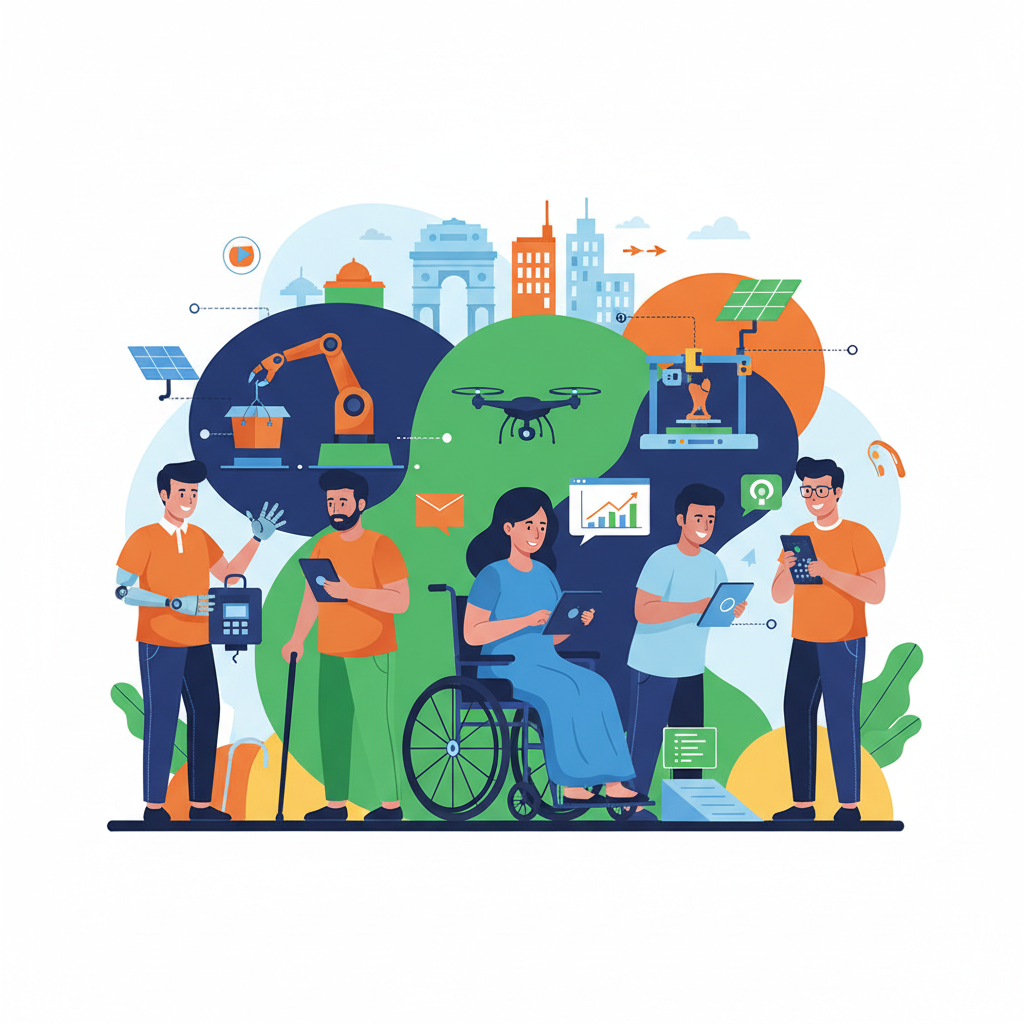
Discover how assistive devices can empower Divyangjan in India by enhancing mobility, communication, and daily living. This guide covers available devices, government schemes, and where to find support for a more independent life.
Assistive devices are tools and technologies designed to help Divyangjan overcome barriers and participate more fully in daily life. In India, a wide range of such devices is available to support individuals with various disabilities, promoting greater independence in areas like mobility, communication, and personal care. Understanding the types of devices and how to access them can significantly enhance the quality of life and entrepreneurial opportunities for disabled entrepreneurs.
Key Takeaways:
- Assistive devices boost independence for Divyangjan in India.
- Devices range from mobility aids to communication and daily living tools.
- Government schemes like ADIP and NHFDC provide financial assistance.
- Accessibility and affordability are key considerations.
- Official government portals are the best source for scheme details.
What are Assistive Devices for Persons with Disabilities?
Assistive devices are any item, piece of equipment, or product system, whether acquired commercially, modified, or customized, that is used to increase, maintain, or improve the functional capabilities of persons with disabilities. These can be simple, low-tech solutions or advanced, high-tech equipment, all aimed at fostering greater autonomy and participation.
For example, a person with a mobility impairment might use a wheelchair or crutches, while someone with a visual impairment could benefit from a white cane or screen-reading software. These tools are crucial for daily activities, education, employment, and social engagement, enabling Divyangjan to pursue their goals, including entrepreneurial ventures.
What Types of Assistive Devices are Available in India?
India offers a comprehensive range of assistive devices catering to diverse needs, helping Divyangjan live more independently and pursue various opportunities, including self-employment. The types of devices available often fall into several categories:
Mobility Aids
These devices assist individuals with movement and navigation, essential for daily commuting and accessing workplaces. They include:
- Wheelchairs: Manual and powered wheelchairs for indoor and outdoor use.
- Crutches and Walkers: Support for individuals with partial weight-bearing capabilities.
- Canes and White Canes: Essential for vision-impaired individuals to detect obstacles.
- Artificial Limbs (Prosthetics and Orthotics): Devices that replace or support missing or impaired body parts.
- Motorized Scooters and Tricycles: For enhanced personal mobility over longer distances.
Hearing Aids and Communication Devices
These devices facilitate communication, which is vital for business interactions and learning. They include:
- Hearing Aids: Devices to amplify sound for individuals with hearing loss.
- Cochlear Implants: Surgical electronic devices that provide a sense of sound to a person who is profoundly deaf or severely hard of hearing.
- Speech Generating Devices (SGDs): Tools that help individuals who cannot speak or have difficulty speaking to communicate.
- Assistive Listening Devices (ALDs): For improved listening in specific situations, like classrooms or meetings.
Vision Aids and Low Vision Devices
Aiding individuals with visual impairments to read, navigate, and use technology effectively:
- Magnifiers: Optical devices to enlarge text or images.
- Screen Readers and Magnifiers (Software): Software like NVDA or JAWS that reads out screen content or magnifies parts of the screen.
- Braille Displays and Keyboards: For tactile input and output for Braille users.
- Accessible Smart Devices: Smartphones and tablets with built-in accessibility features.
Devices for Daily Living and Self-Care
These tools make routine tasks easier, contributing to greater personal autonomy:
- Adapted Utensils: Eating aids with modified handles or grips.
- Dressing Aids: Tools like button hooks, long-handled shoehorns.
- Toilet and Bathing Aids: Grab bars, shower chairs, raised toilet seats.
- Environmental Control Units (ECUs): Devices that allow control of lights, appliances, and doors.
Computer Access and Assistive Technology
Essential for education, employment, and digital entrepreneurship:
- Alternative Keyboards and Mice: Ergonomic keyboards, trackballs, head-operated mice.
- Voice Recognition Software: For inputting text and controlling computers using speech.
- Ergonomic Workstations: Adjustable desks and chairs to suit individual needs.
- Specialized Software: Learning disability software, communication software.
How to Get Assistive Devices in India?
Accessing assistive devices in India often involves a combination of government schemes, non-governmental organizations (NGOs), and commercial purchases. It's always advisable to consult with a medical professional or rehabilitation specialist to determine the most suitable device for individual needs.
Government Schemes for Assistive Devices
The Government of India has several initiatives to provide assistive devices to Divyangjan, often at subsidized rates or free of cost. The primary scheme is:
- Assistance to Disabled Persons for Purchase/Fitting of Aid and Appliances (ADIP Scheme): Operated by the Ministry of Social Justice and Empowerment, this scheme provides financial assistance for the purchase of various standard aids and appliances. The amount of assistance depends on the income of the applicant. Camps are frequently organized across the country where assessment and distribution take place. You can find more details on the Ministry of Social Justice and Empowerment website.
- National Handicapped Finance and Development Corporation (NHFDC): NHFDC provides financial assistance, including loans for the purchase of assistive devices and for setting up businesses. This can be particularly helpful for disabled entrepreneurs looking to invest in specialized equipment for their ventures. Visit nhfdc.nic.in for detailed information on their schemes.
- State-specific Schemes: Many state governments also have their own schemes for providing assistive devices. It is recommended to check with your respective State Social Welfare Department or Department for the Empowerment of Persons with Disabilities.
Note: Scheme rules, eligibility criteria, and assistance amounts can change. Always verify the latest information on the official government portals before applying.
Steps to Apply for Government Assistance (General Guide)
- Obtain a Disability Certificate and UDID Card: Most schemes require a valid Unique Disability ID (UDID) Card and a disability certificate issued by a competent medical authority.
- Identify the Need: Consult with a medical professional, rehabilitation expert, or therapist to determine the most appropriate assistive device.
- Check Eligibility: Review the eligibility criteria for the specific scheme (e.g., ADIP, NHFDC) you wish to apply under. This often includes income limits and disability type.
- Gather Documents: Collect all necessary documents, which typically include proof of identity, address, income, disability certificate, and UDID card.
- Apply: Submit the application through the designated channel, which could be an online portal, a district disability rehabilitation centre (DDRC), or during a special camp.
- Assessment and Fitting: If approved, an assessment may be conducted to ensure the device is suitable, followed by fitting and training on its use.
Eligibility for Assistive Device Schemes in India
Eligibility for government schemes often depends on several factors, ensuring that assistance reaches those most in need. While specific criteria vary by scheme, common requirements include:
- Citizenship: Applicant must be an Indian citizen.
- Disability Certificate: A valid certificate of disability from a recognized medical authority, often linked to the UDID card.
- Income Criteria: Many schemes, like ADIP, have income ceilings. For instance, individuals with a monthly income up to ₹20,000 may receive full assistance, while those earning between ₹20,001 and ₹30,000 might receive 50% subsidy. These figures are illustrative and should be confirmed on official portals.
- Age: Some schemes may have age-related criteria, though many are inclusive of all age groups.
- Prior Assistance: Often, there's a clause regarding not having received a similar device from the government within a certain period (e.g., 3-5 years).
The Importance of an Accessible Environment
While assistive devices are crucial, they are most effective when coupled with an accessible environment. An accessible environment, whether it's a home, workplace, or public space, ensures that Divyangjan can fully utilize their devices and participate without undue barriers. This includes:
- Ramps and lifts for mobility device users.
- Accessible washrooms.
- Signage in Braille or large print.
- Audible signals at crossings.
- Accessible digital interfaces for online services and entrepreneurship platforms like Divyang Startup.
Investing in both assistive devices and creating accessible infrastructure empowers Divyangjan to contribute their skills and talents to the economy, including through various government schemes supporting entrepreneurship and business loans.
Conclusion
Assistive devices are powerful enablers for Divyangjan in India, fostering greater independence, participation, and economic empowerment. From mobility aids to advanced communication tools, these devices, combined with supportive government schemes and an accessible environment, pave the way for a more inclusive society. As a Divyang entrepreneur, understanding and leveraging these resources can significantly enhance your journey towards self-reliance and success. Always remember to check official government websites for the most current information on schemes and eligibility.